




OVERVIEW
THE PRODUCT
ETFs (Exchange-Traded Funds) are investment funds traded on stock exchanges that seek to replicate the performance of a benchmark index, such as the Ibovespa, S&P 500, sector-specific indices, among others. Their objective is to provide diversified, transparent, and cost-effective market exposure.
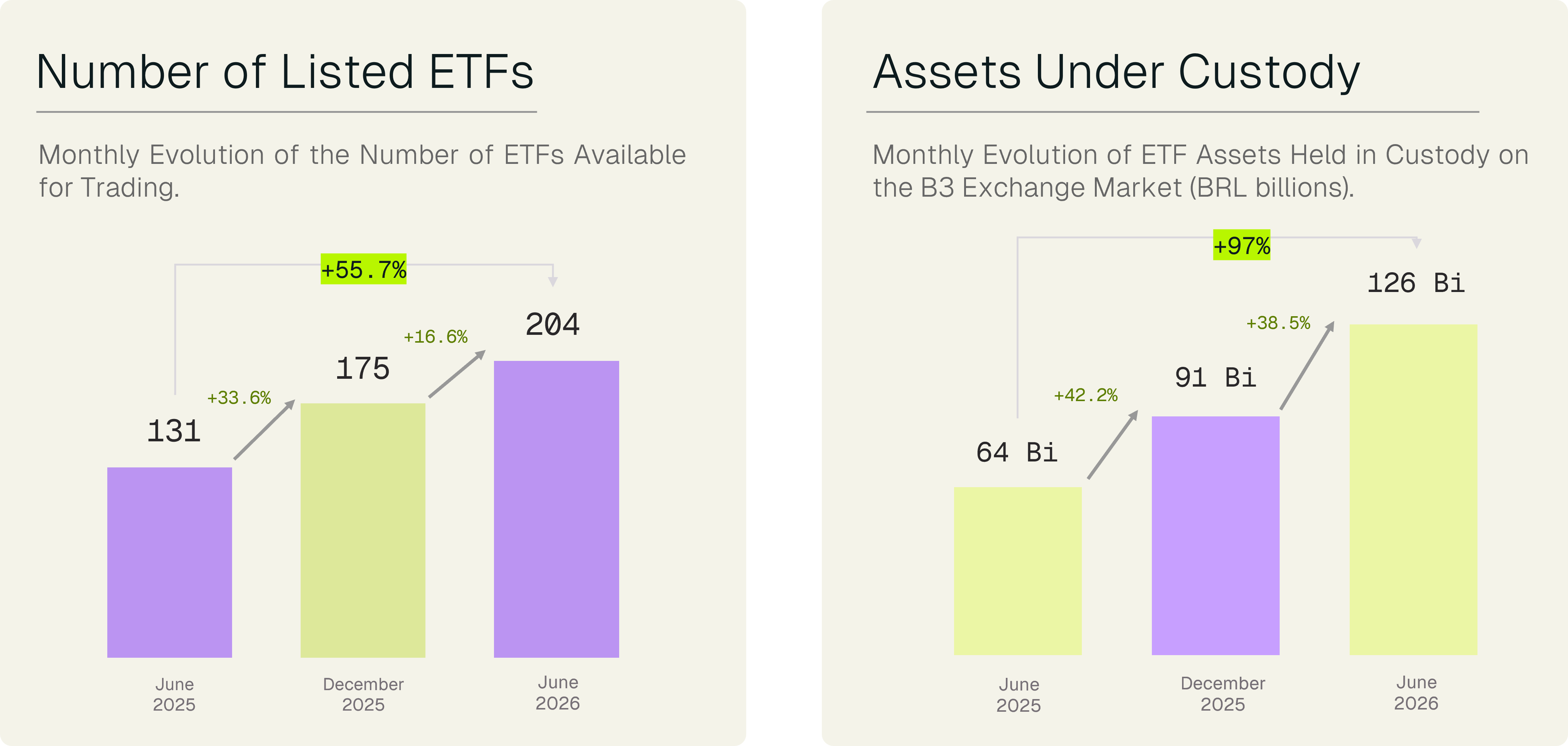
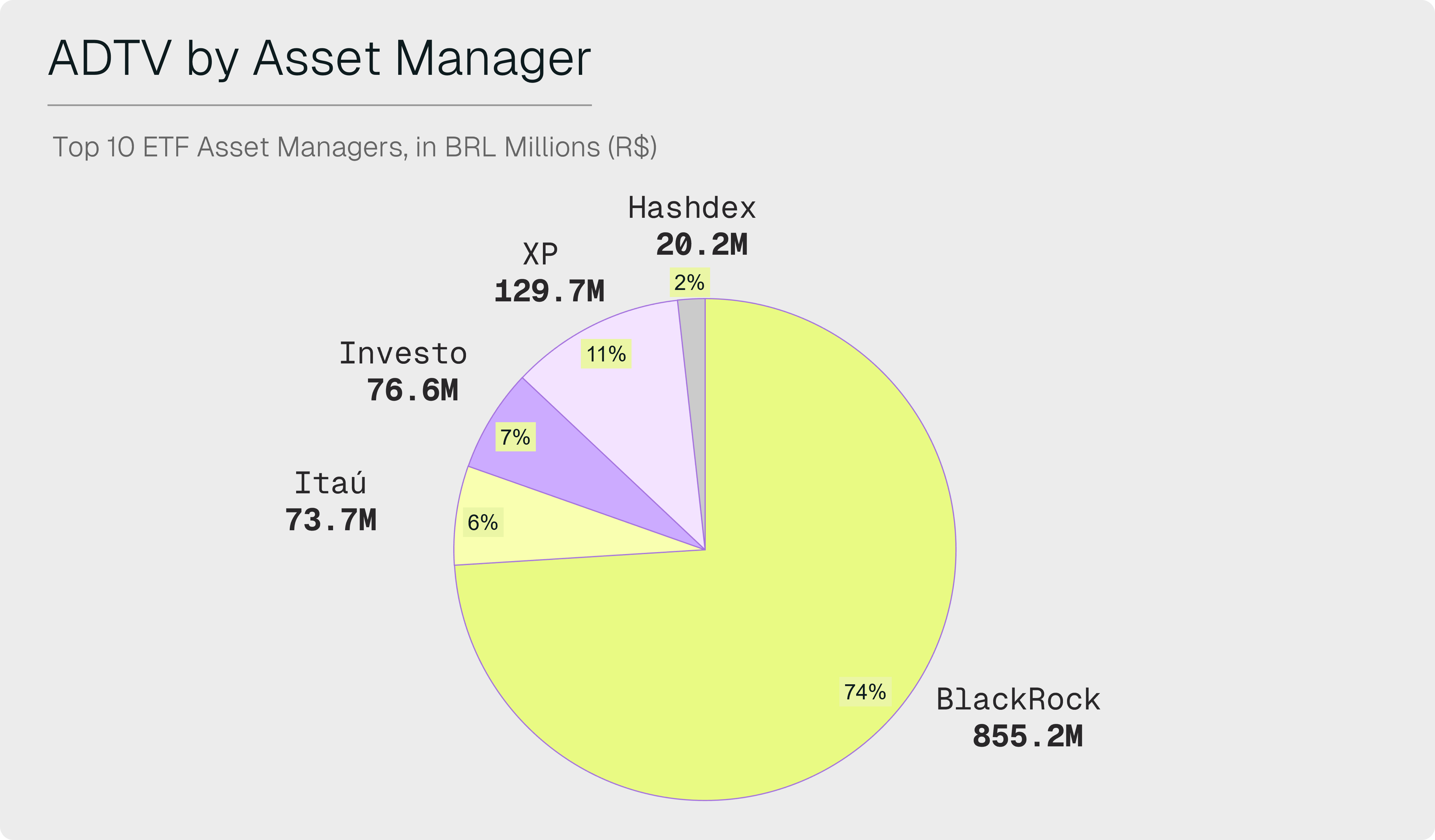
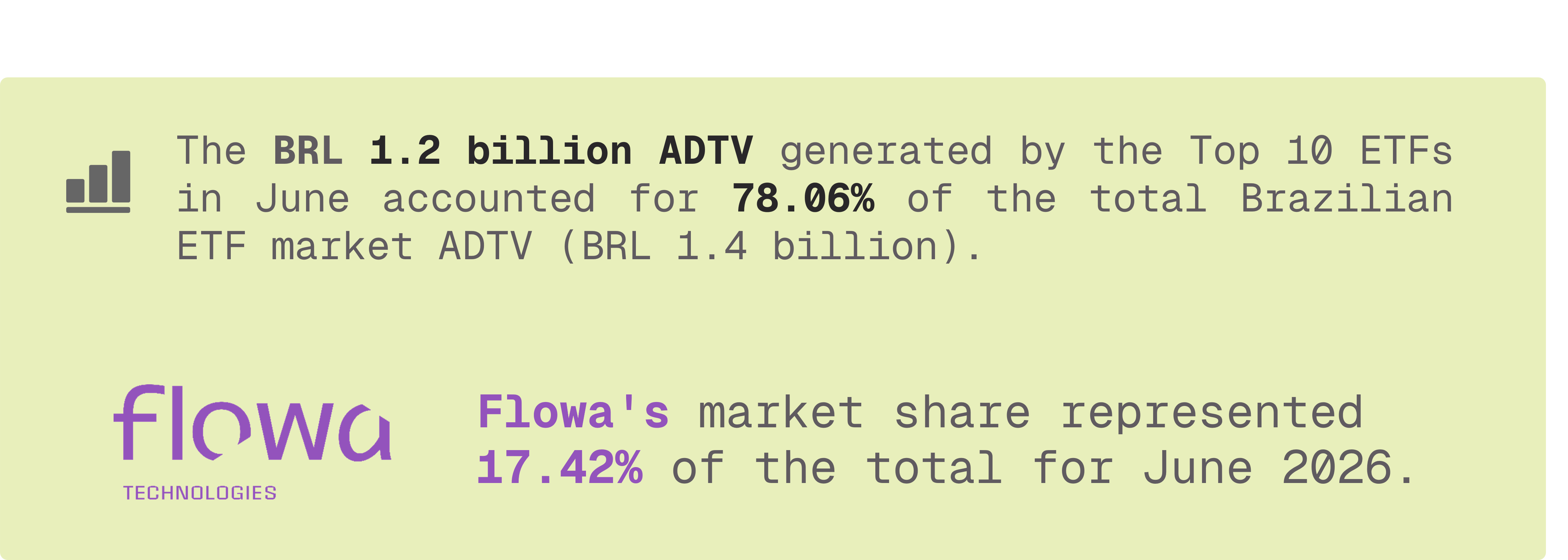
The Brazilian ETF market continues to expand, with approximately BRL 1.4 billion in ADTV¹ as of June 2026 and BRL 126 billion in assets under custody, driven primarily by Ibovespa, Small Cap, fixed income, cryptocurrency, and international markets.
REGULATION
In markets such as the United States and Europe, regulatory frameworks provide flexibility for active, leveraged, inverse, and other complex ETF strategies. In Brazil, however, regulations established by the Brazilian Securities and Exchange Commission (CVM) are more restrictive: leveraged, inverse, and synthetic ETFs are generally prohibited (with limited exceptions). Brazilian ETFs must passively track a benchmark index and maintain a low tracking error.
This year, however, the CVM announced that it is evaluating updates to the current regulatory framework to allow active ETFs and leveraged products, bringing the Brazilian market closer to structures already adopted internationally. A public consultation is expected to be launched in 2026, with the regulatory process anticipated to be completed in 2027.
THE ETF MARKET BY THE NUMBERS
The Brazilian ETF market is growing both in the number of listed funds and in assets under management. Between June 2025 and June 2026, the number of ETFs increased by 55.7%, while total assets nearly doubled, reaching 97% growth over the same period.
ADTV¹: Average Daily Traded Volume
INVESTOR BASE STRUCTURE
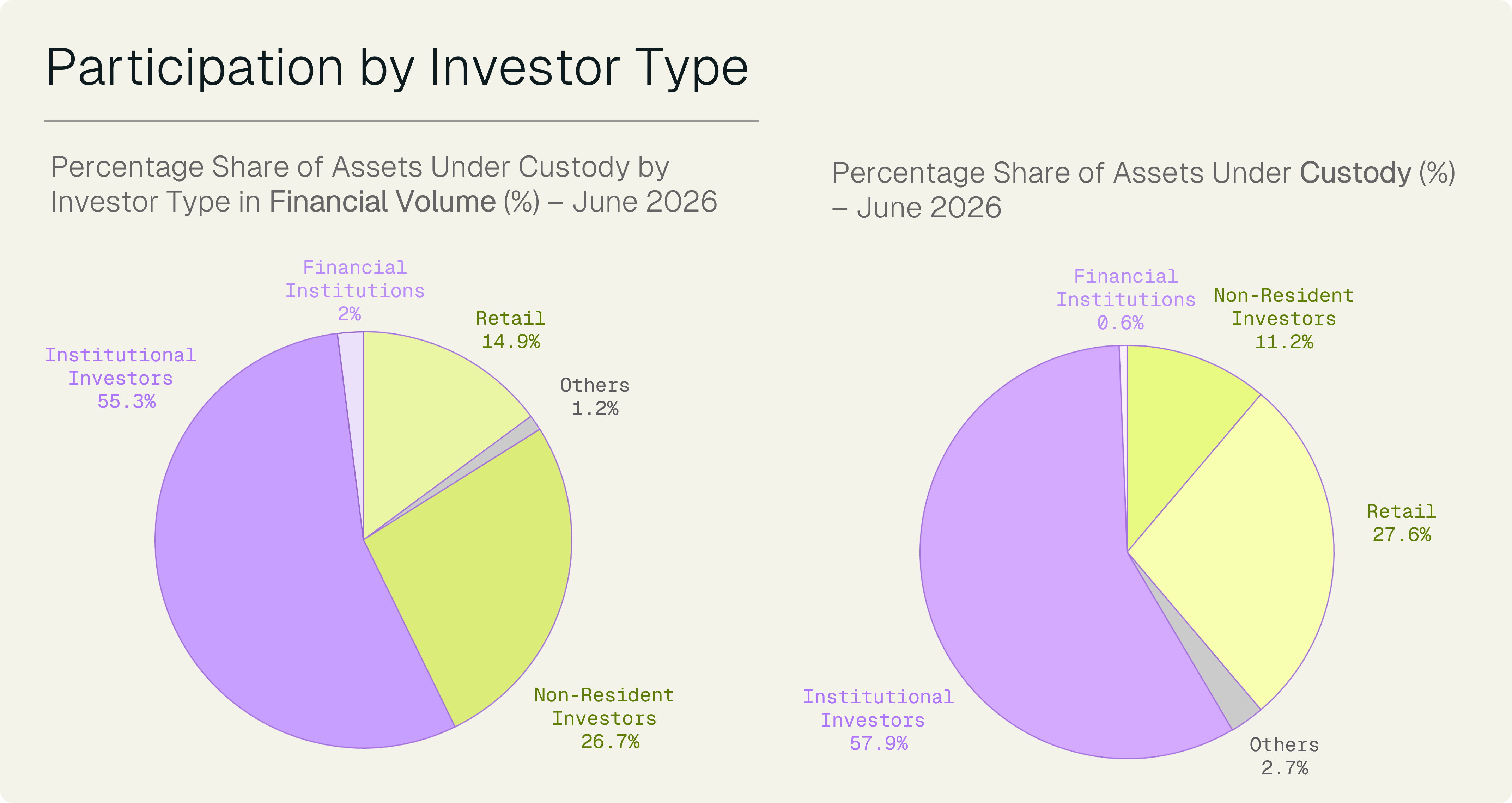
The product remains predominantly traded and held in custody by institutional investors, who generally act as ETF issuers in the Brazilian market.
Non-resident investors, in turn, account for a significant share of trading volume but a much smaller share of assets under custody. This suggests that they tend not to hold positions overnight, likely closing out their positions by the end of each trading session. Retail investors exhibit the opposite behavior: while they rank third in terms of trading volume, they hold the second-largest share of assets under custody, indicating a stronger preference for medium and long-term investment strategies.
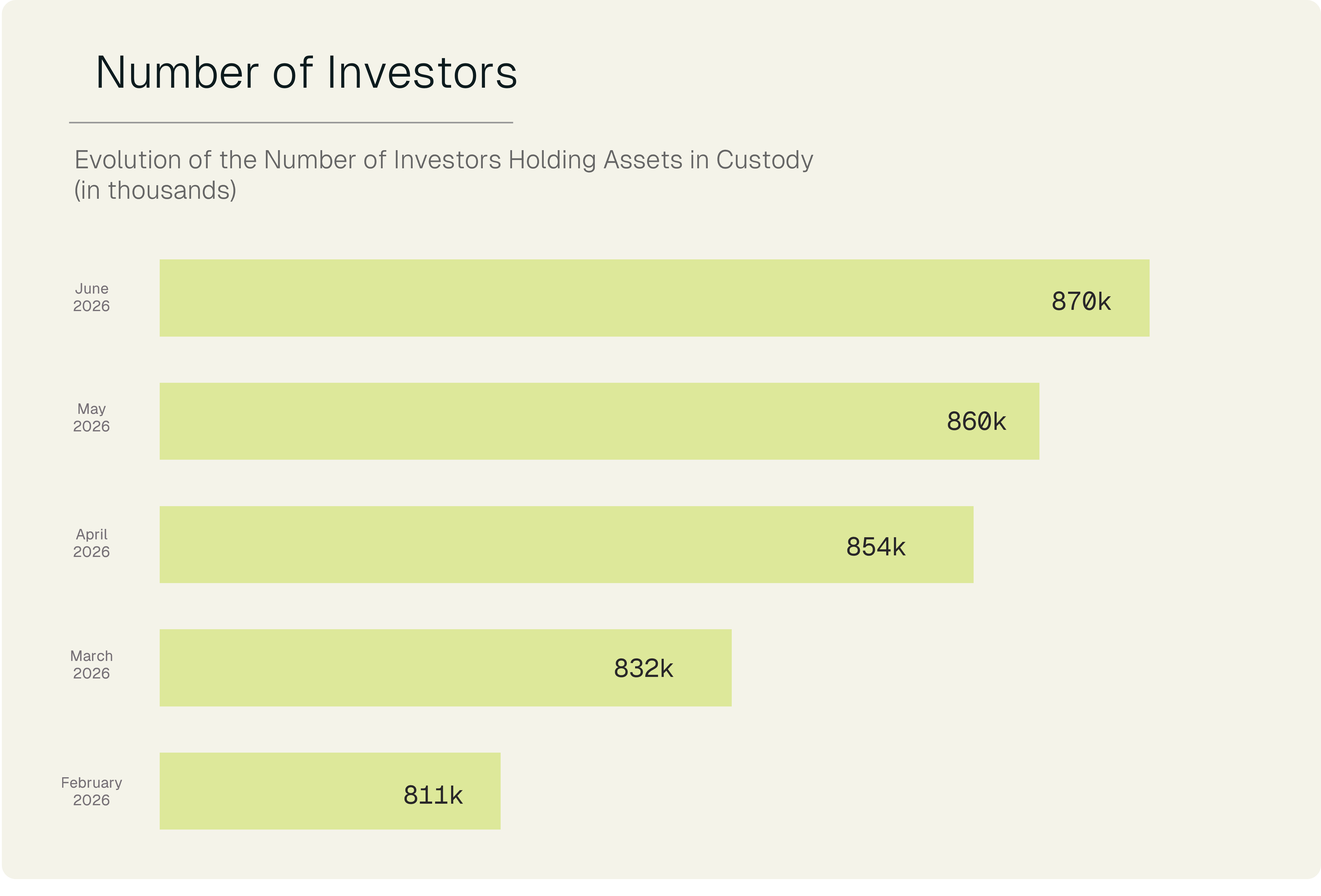
The number of investors holding ETF positions in custody has continued to grow throughout 2026, increasing by 7% over the first five months of the year.
TOP 10 MOST TRADED ETFs
JUNE 2026
TOP 10 MOST TRADED ETFs
JULY 2025 TO JUNE 2026
KEY TAKEAWAYS
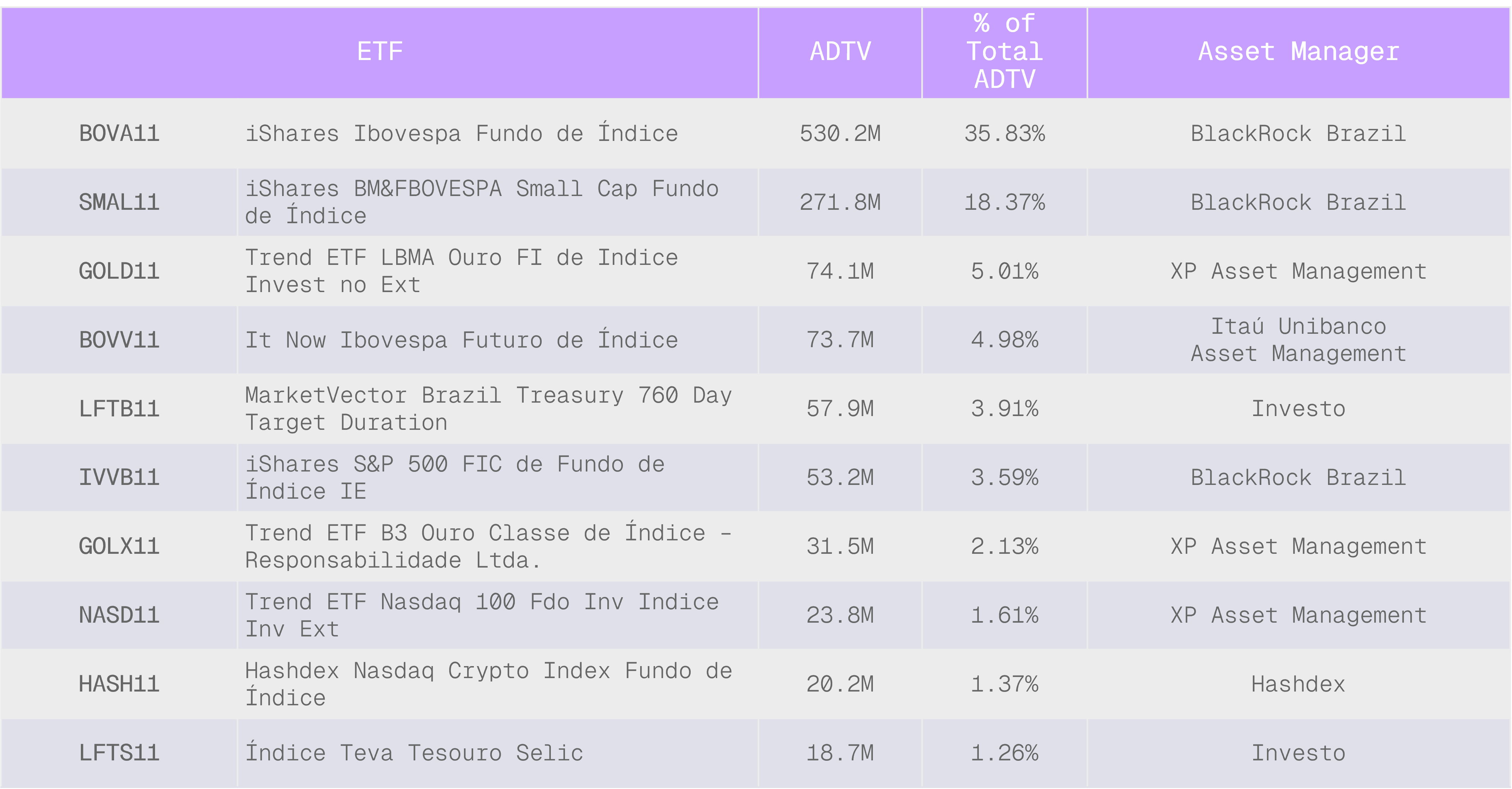
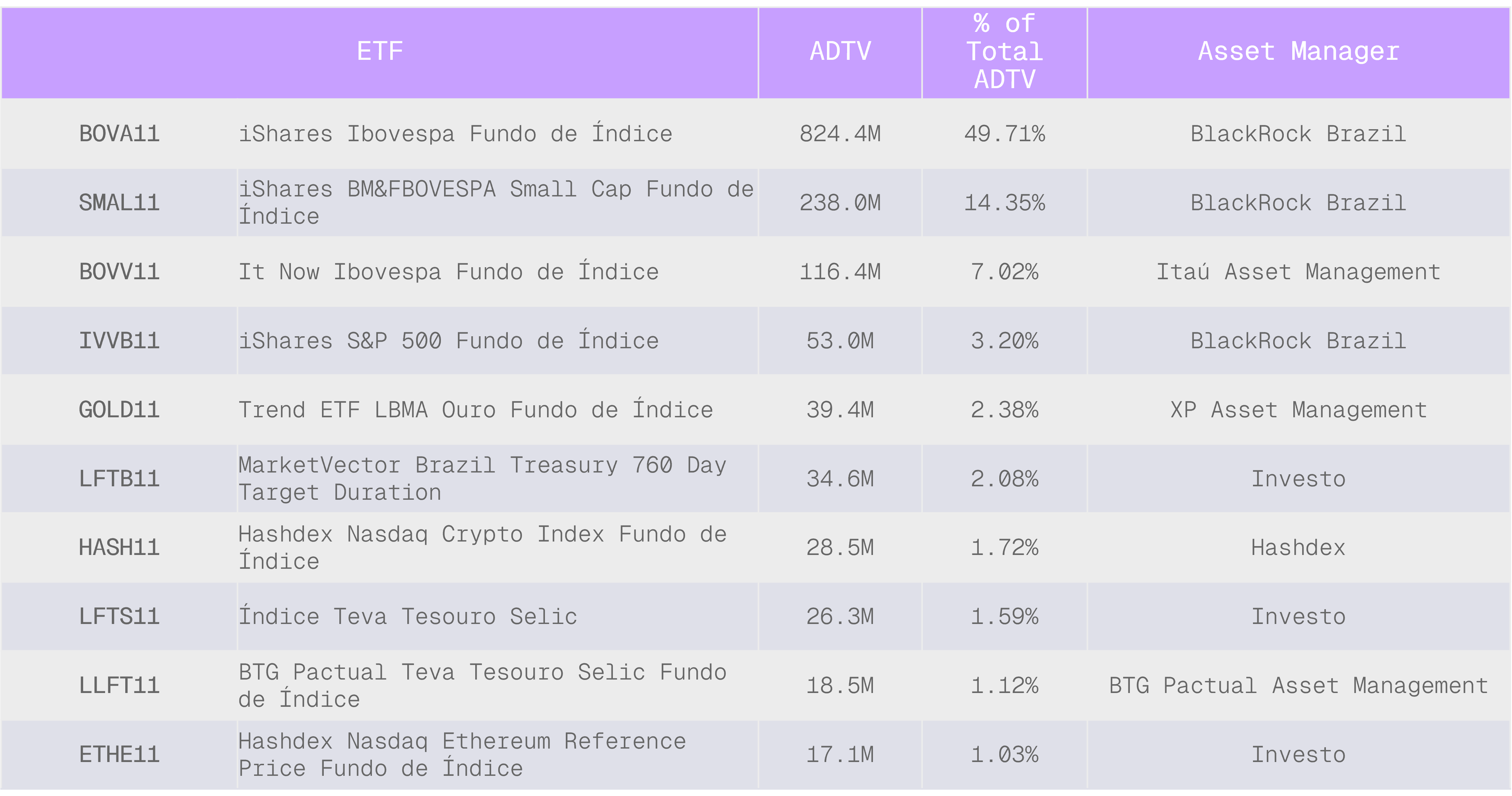
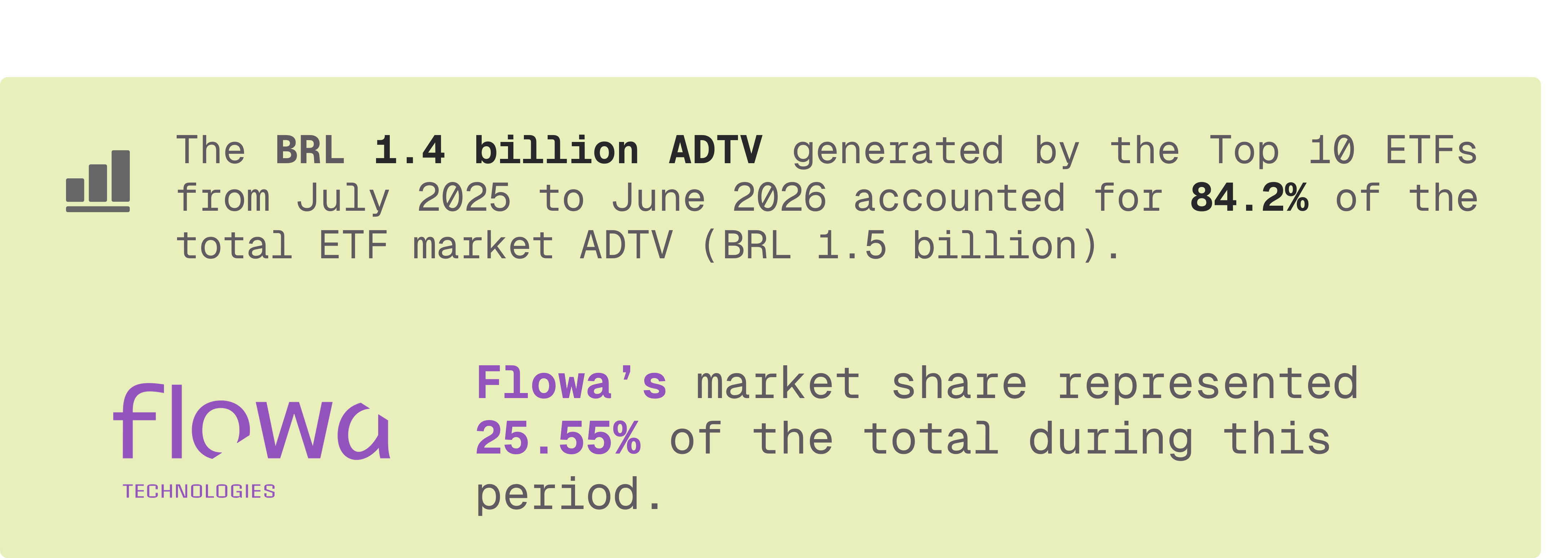
- The Brazilian ETF market remains highly concentrated, with the 10 most traded ETFs accounting for approximately 80% of total trading volume both in June 2026 and over the trailing 12-month period.
- Despite this concentration, the leading ETFs reflect a diverse range of asset classes, including equities, government fixed income, cryptocurrencies, and commodities, highlighting the role of ETFs as investment vehicles for different strategies.
- The results indicate a market with significant growth potential, supported by the increasing number of ETF listings and the broader adoption of ETFs as investment instruments, driven by their high liquidity, operational simplicity, and accessibility for investors.
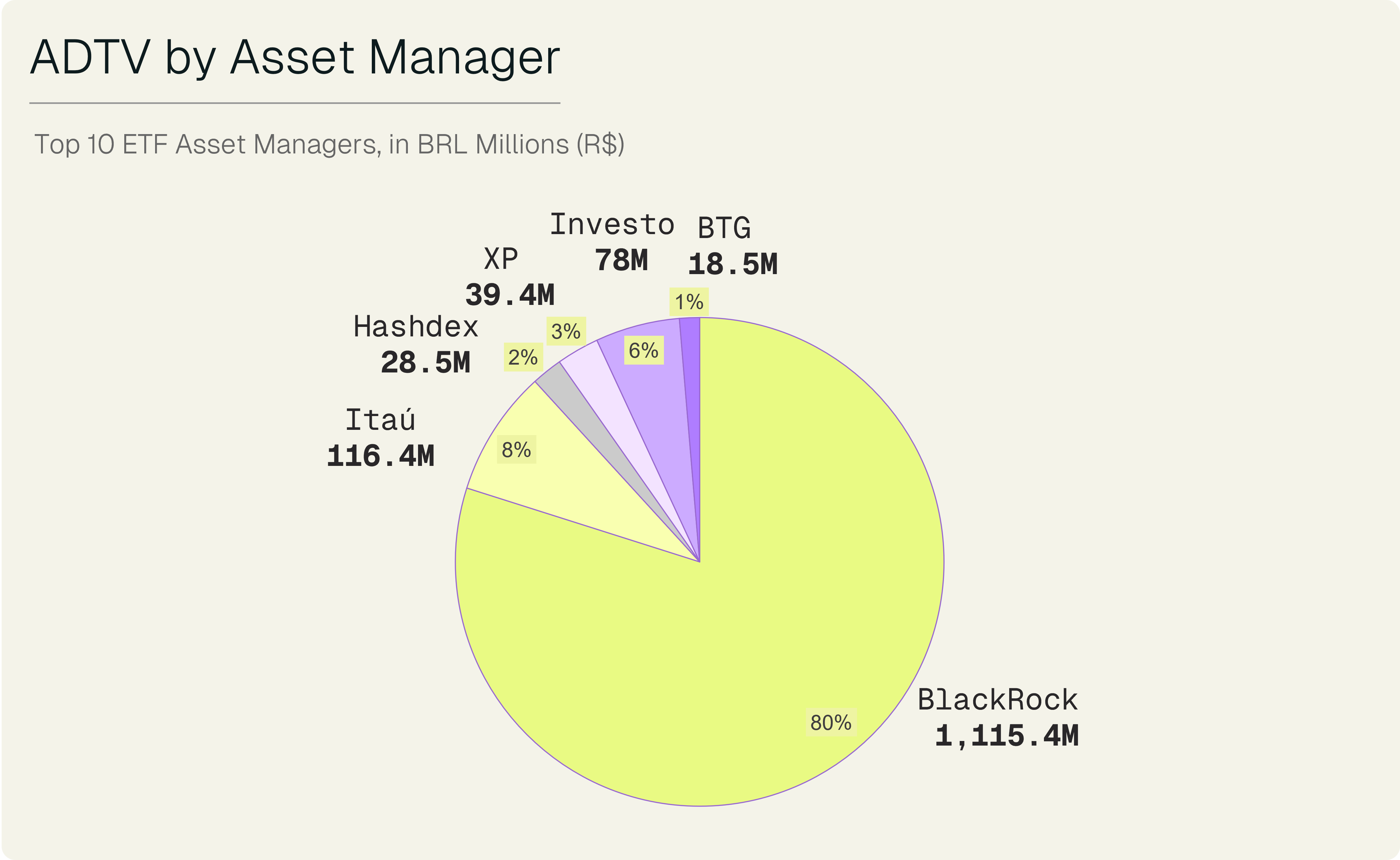
- Among issuers, BlackRock maintained a clear leadership position throughout the analyzed period, with an ADTV of BRL 1,115.4 million, representing 80% of total trading volume over the 12-month period.
- XP Asset established itself as the second-largest asset manager by trading volume in June 2026, reaching an ADTV of BRL 129.7 million (11%), compared to an average of BRL 39.4 million (3%) over the previous 12 months. This growth was driven by the inclusion of the GOLX11 and NASD11 ETFs among the 10 most traded ETFs of the month.
